The Sprint and the Scrum
How is agile development organized over time? With the Sprint and Scrum.
Agile Method: General Overview
The unit of time in the agile Scrum method is the Sprint. It is a repeating period that can vary depending on the team, from 2 weeks to 1 month.
Note: This post was translated from french with the help of AI. The original post was written with the knowledge of a younger me.
It is during this period that the stories are completed.
It is framed by a kick-off ceremony that prepares the work and a closing ceremony that reviews the work done.
Each workday morning during this period, a daily meeting (or Scrum) takes place to keep the Sprint goals on track.
The goals of a Sprint are simple: move all the stories planned for it from TODO to DONE.
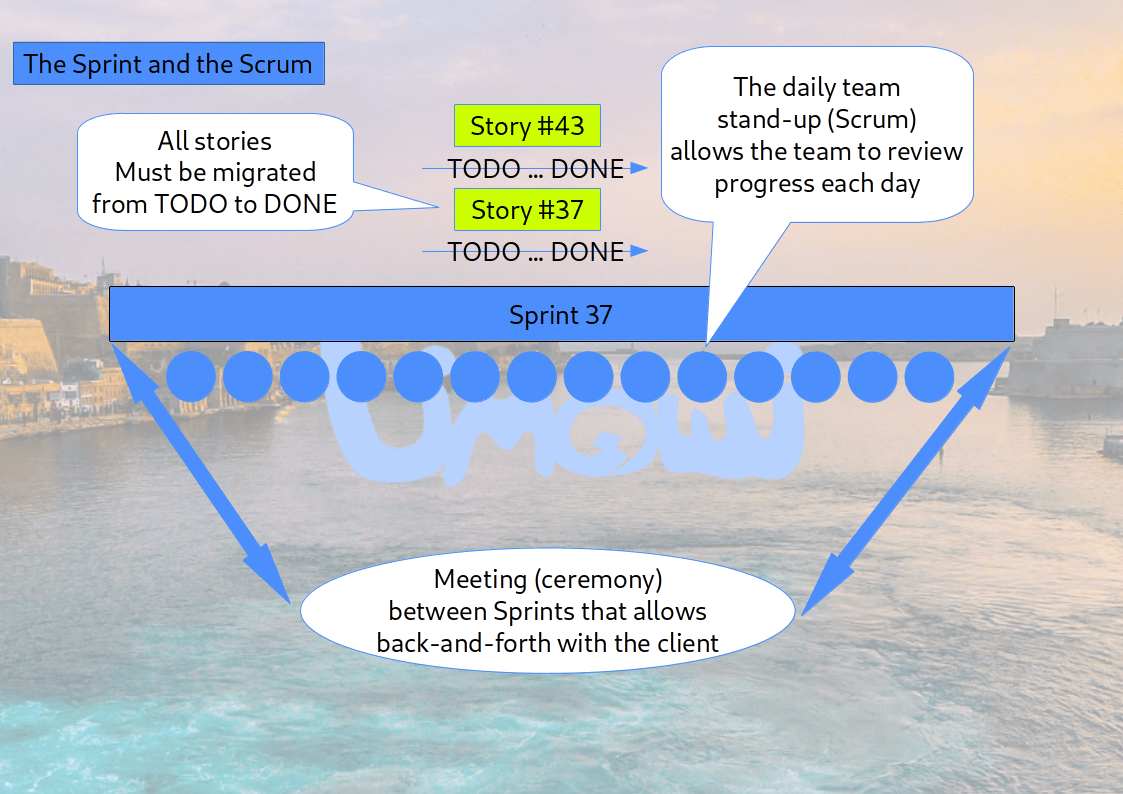
The Sprint and Scrum (Diagram)
The goals of a Sprint are simple: move all planned stories from TODO to DONESpecial Case: Sprint 0
Sprint 0 is the very first Sprint, coming immediately after the Discovery & Framing phase. This Sprint mainly serves as a warm-up phase for the team.
The team gets familiar with the work environment, the flow of daily meetings, all project stakeholders, etc.
Contrary to what some sources suggest, I do not recommend describing the product and its target in this Sprint; the Discovery & Framing phase is more suitable for that.
This Sprint should resemble a normal Sprint as much as possible, while keeping in mind that the team is still discovering the subject.
Since this Sprint is not effective for actual project development, it is counted separately.
The Scrum (Daily Stand-up)
The Scrum (French: “mêlée”) is the daily meeting held every morning. It gives its name to this agile method.
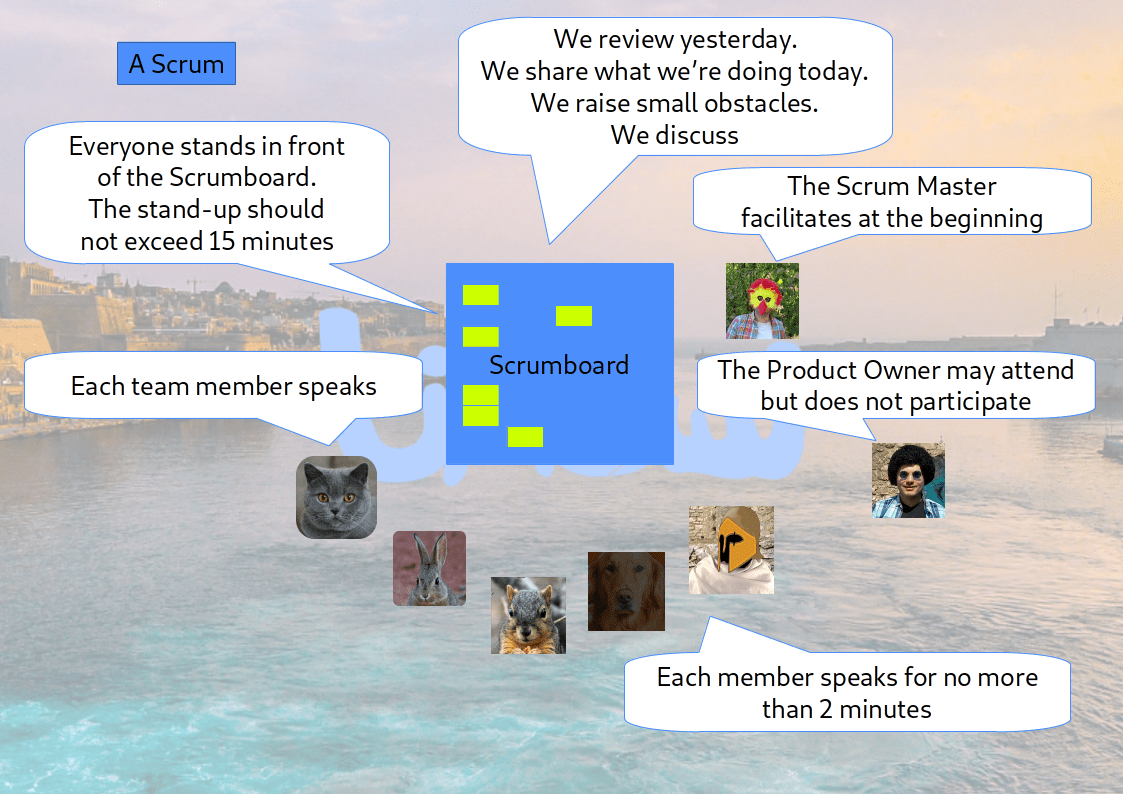
The Scrum (Diagram)
This meeting should be held standing (also called Stand-up meeting)This meeting should be held standing (also called a Stand-up meeting). It concerns only the development team and is facilitated (but not led) by the Scrum Master.
Each team member should have the opportunity to speak. They share what they did yesterday and what they plan to do today. If obstacles arise, the Scrum Master can decide either to resolve them immediately (if quick to fix) or schedule a discussion for another time.
The meeting should not exceed 15 minutes. It should occur at the same time and place every day (usually with a Scrum Board visible).
This meeting is also a social gathering for the team members. Gradually, the Scrum Master should step back to let the team take ownership of the meeting, reinforcing team spirit.
The idea is for team members to have a moment to help each other and maintain a global view of the project. It is not a reporting session (that can be automated and addressed one-on-one with the Scrum Master if needed).
The three questions this meeting answers are:
- What was done yesterday?
- What do you plan to do today?
- What obstacles did you encounter?
The Scrum of Scrums
If a project requires multiple agile teams, a scrum of representatives from each team (not the * Scrum Master*s) can be held. This scrum of representatives takes place after the team-level scrum.